My Role
For this project, I was responsible for creating the devices, workspaces, and drawing tools for the students. I was also responsible for creating the report, and documenting any findings. The implementation of the devices and the engagement of the students was handled by the occupational therapist at the school.
Background
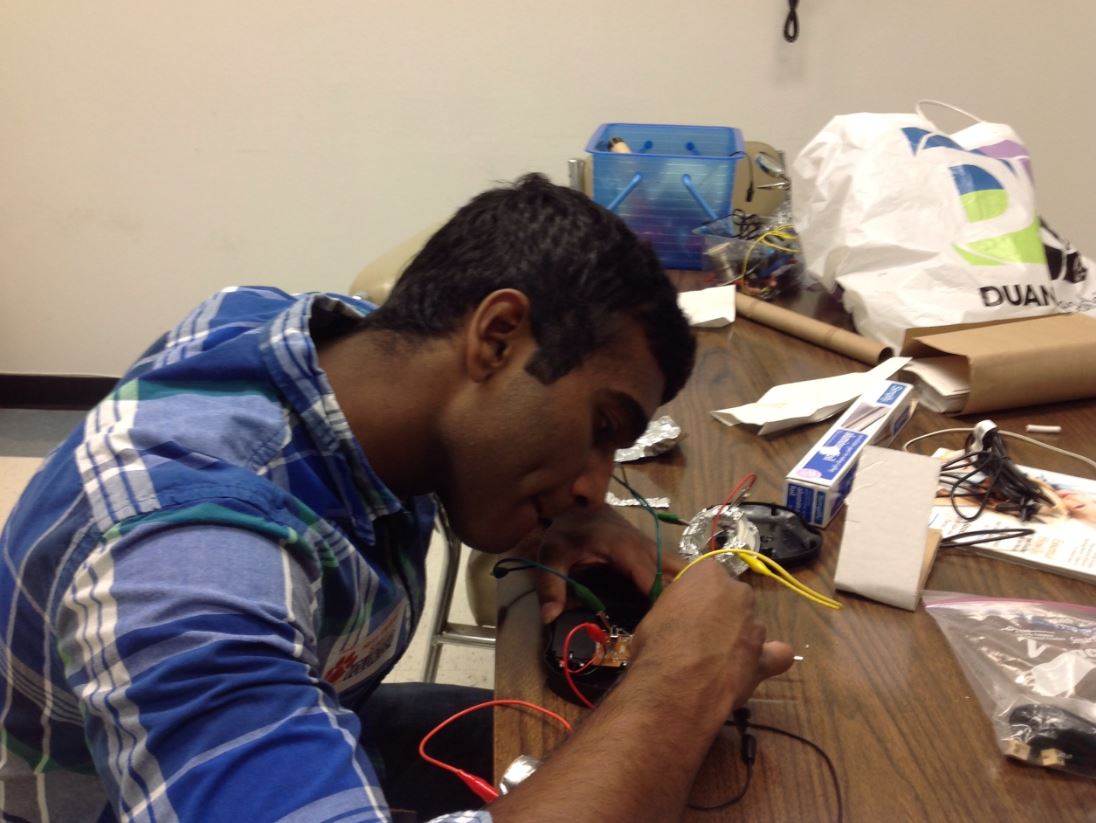
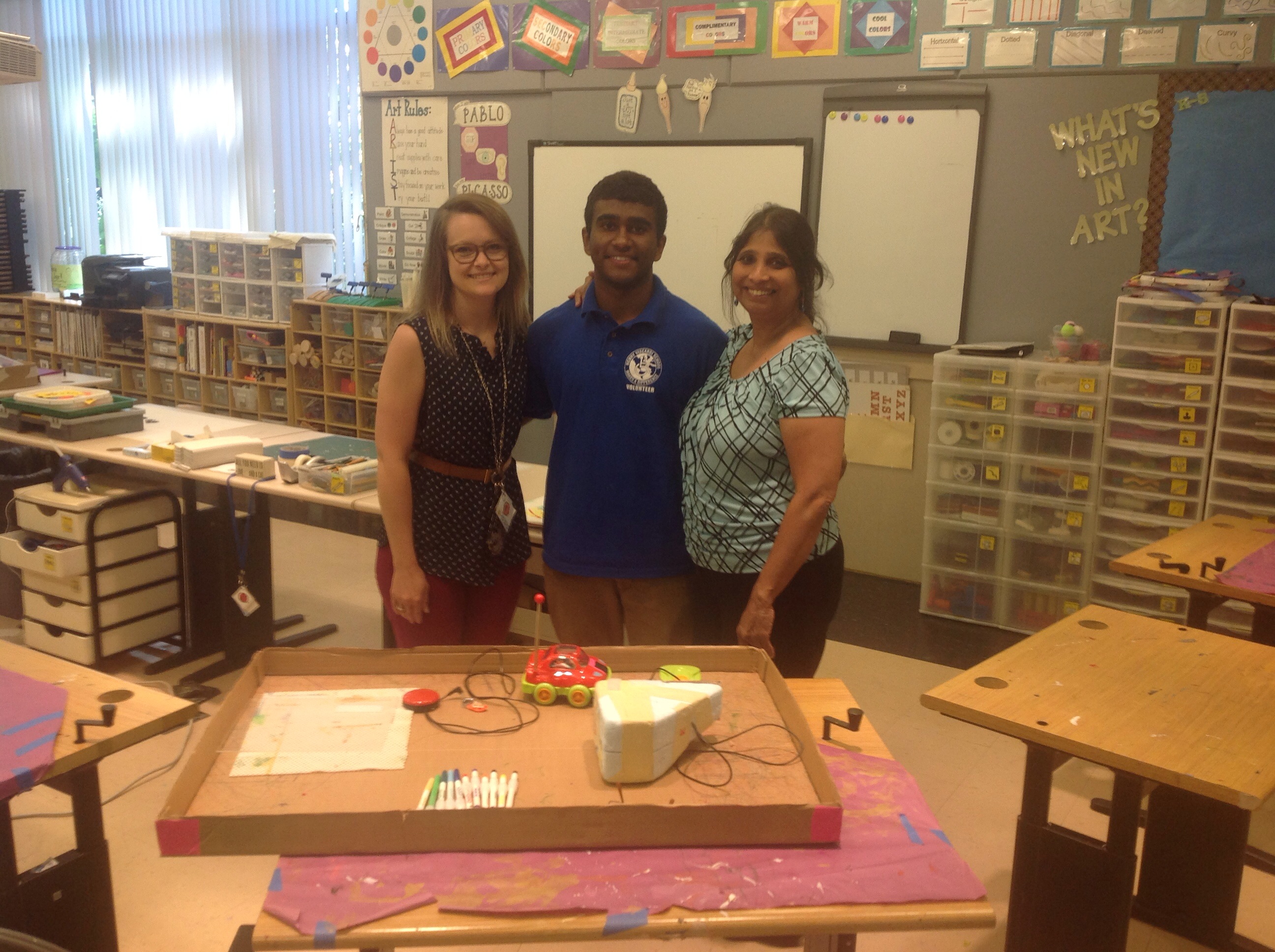
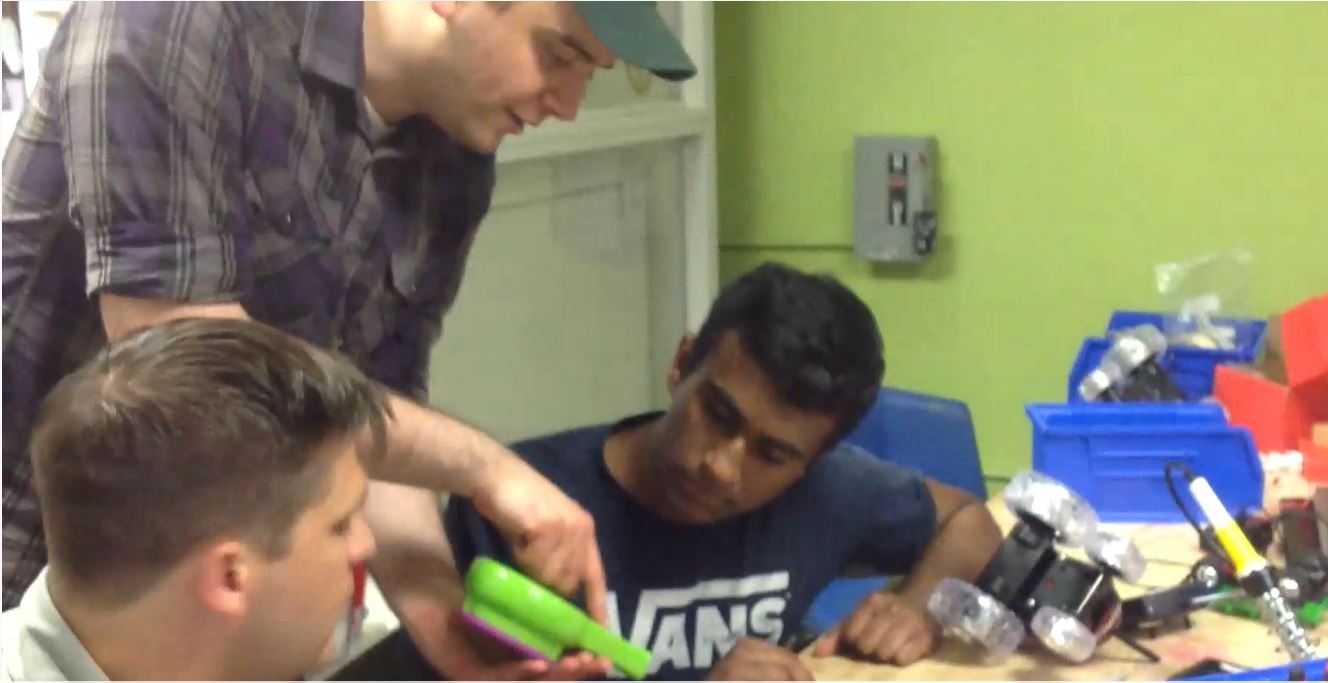
Language development, decision making, and improved academic performance, are some of the vast benefits of practicing the arts. Unfortunately, a lack of upper extremities mobility and strength, forces disabled students to rely on nurses to move their hands to draw. Three different devices were constructed to allow these students to create artwork. These devices all used the technique of adapting r/c cars into tools for drawing. First adaptations were made to the remote transmitters. The first transmitter was adapted by merging orthoplast, cylindrical pipes, and a cut open tennis ball, to create a joystick. This was modeled after the manual joystick commonly used in electric wheelchairs. For students lacking dexterity skills to control a joystick, two new remote transmitters were created. Adaptations to these transmitters were primarily made on the circuit board of the remotes using soldering techniques to extend the circuit to a mono-jack(s). The mono jack(s) allowed the cars to be controlled by any specialized switches such as a micro light or jelly bean switch. Finally Velcro and Foam grips were used to allow markers to be attached to the r/c cars. This low cost, adaptive design project has the potential to make artwork accessible to all.
Read the full paperVideos (Devices in Use)
Using a Micro Light Switch to Draw
Using a Headrest with Jelly Bean Buttons to Draw